


Lake Ontario is one of North America’s most important freshwater bodies and a vital part of the Great Canada Lakes system. Located at the eastern end of the Great Lakes, it plays a central role in water supply, ecology, transportation, and regional development. From natural ecosystems to major cities, Lake Ontario connects environmental processes with human activity in powerful and lasting ways.
Overview of Lake Ontario
Lake Ontario is the smallest of the Great Lakes by surface area, but it holds immense strategic and environmental importance. It forms part of the natural border between Canada and the United States and serves as the primary outflow point of the Great Lakes into the St Lawrence River.
Lake Ontario serves as a shared international lake, forming part of the boundary between Canada and the United States. Its waters are jointly managed, meaning environmental decisions, water levels, and conservation efforts affect communities on both sides of the border. The lake receives most of its water from the Niagara River, which connects it to Lake Erie, making Lake Ontario a downstream hub that reflects conditions from the entire Great Lakes watershed.
Lake Ontario at a Glance
- Smallest of the Great Lakes by surface area
- Average depth of about 86 meters
- Maximum depth of roughly 244 meters
- Shoreline length of approximately 1,146 kilometers
- Forms part of the natural border between Canada and the United States
- Primary outflow is the St Lawrence River
Geographic Features and Water Connections
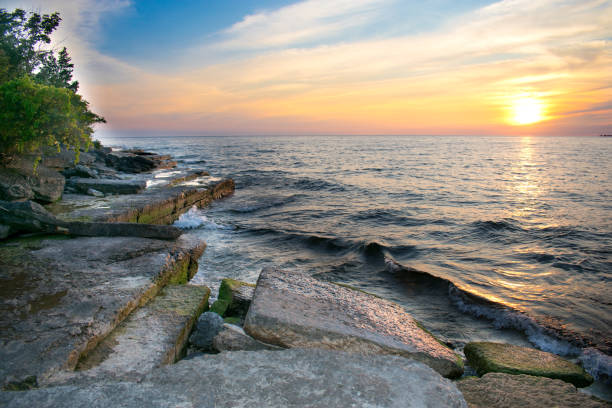
Position Within the Great Lakes System
Lake Ontario is the easternmost lake in the Great Lakes chain. Water flows into it from upstream lakes and exits through the St Lawrence River, eventually reaching the Atlantic Ocean. Because of this position, water levels, pollution, and nutrient loads from other lakes directly influence Lake Ontario. Despite being the smallest Great Lake by surface area, Lake Ontario is relatively deep, with an average depth of around 86 meters and some areas reaching well over 200 meters.
Shoreline, Bays, and Tributaries
The shoreline of Lake Ontario varies from urban waterfronts to natural bluffs and wetlands. Numerous rivers and streams feed into the lake, carrying freshwater, sediments, and nutrients from the surrounding watershed. These tributaries play a major role in shaping nearshore ecosystems and water quality. The Lake Ontario shoreline stretches for more than 1,100 kilometers, ranging from densely developed urban waterfronts to natural bluffs, bays, and wetlands.
Water Levels and Flow Control
Water levels in Lake Ontario fluctuate seasonally and are carefully regulated to balance multiple needs, including navigation, hydropower generation, flood control, and ecosystem health. Outflow control affects both shoreline stability and downstream communities along the St Lawrence River.
Ecosystem and Environmental Importance
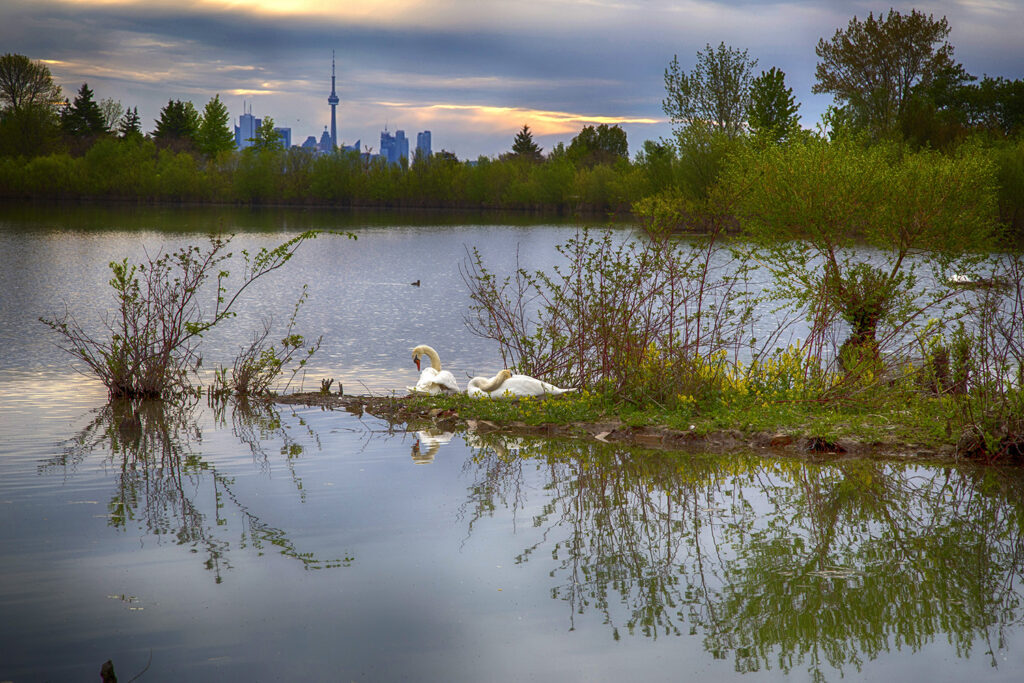
Freshwater Ecosystem and Biodiversity
Lake Ontario supports a complex freshwater ecosystem made up of fish, birds, plankton, and plant life. This biodiversity depends on clean water, stable temperatures, and healthy habitats such as wetlands and nearshore zones.
Key ecological relationships include:
- Plankton forming the base of the food web
- Small fish feeding on plankton
- Larger fish and birds depending on fish populations
Fish Habitat and Water Quality
Fish habitats in Lake Ontario rely heavily on oxygen levels, temperature, and water clarity. Changes in water quality can directly impact spawning grounds and fish survival. Native and stocked species such as trout, salmon, and bass contribute to both ecological balance and recreational fishing.
Wetlands and Shoreline Protection
Wetlands along Lake Ontario act as natural filters, removing pollutants from incoming water while also reducing shoreline erosion. They provide essential nursery habitats for fish and resting areas for migratory birds.
Human Activity Around Lake Ontario

Cities and Urban Development
Major cities such as Toronto, Hamilton, Rochester, and Kingston have grown along Lake Ontario’s shoreline. These cities depend on the lake for drinking water, industry, transportation, and recreation. At the same time, urban development influences shoreline modification, wastewater discharge, and land use patterns.
Shipping, Ports, and Navigation
Lake Ontario is a critical transportation corridor connected to international shipping routes through the St Lawrence Seaway. Ports along the lake support commercial shipping, while navigation systems rely on stable water levels and maintained channels.
Recreation, Tourism, and Fishing
Lake Ontario is widely used for recreational activities, including boating, swimming, fishing, and waterfront tourism. These activities depend strongly on water quality and ecosystem health, making environmental protection essential for local economies.
Climate Influence and Environmental Challenges
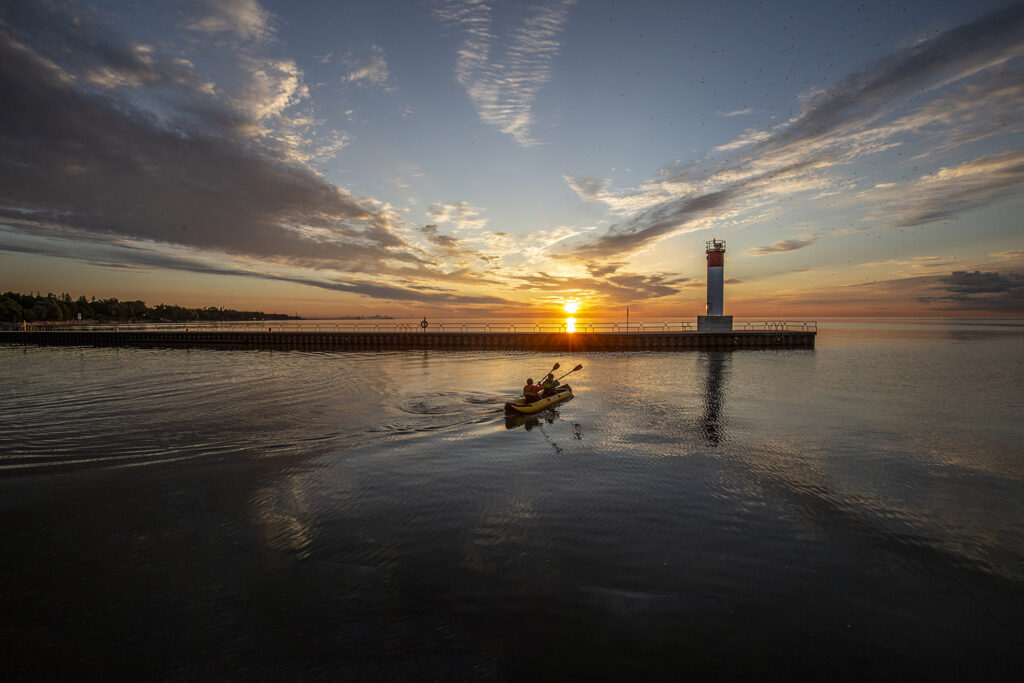
Climate Effects on the Lake
Climate patterns influence water temperature, ice cover, storm intensity, and wave activity on Lake Ontario. Warmer temperatures reduce winter ice cover, which can increase shoreline erosion and alter fish habitats.
Invasive Species and Ecosystem Stress
Invasive species have altered food webs and competed with native species for resources. These changes can disrupt long-standing ecological relationships and require ongoing management and conservation efforts.
Cultural and Historical Significance
As one of the Great Lakes, Lake Ontario holds significant cultural and historical importance:
Indigenous and Early Settlement History
Indigenous peoples were the first to navigate and rely on Lake Ontario for transportation, fishing, and trade. Later, European exploration and settlement expanded along the lake, driven by its strategic location and access to trade routes.
Trade Routes and Regional Growth
Lake Ontario played a key role in the development of trade routes connecting inland North America to the Atlantic world. These routes encouraged settlement growth, port development, and long-term economic expansion across the region.
Why Lake Ontario Matters Today
Lake Ontario functions as a central connector between natural systems, human communities, and climate forces. Changes in one part of the system often ripple outward, affecting ecosystems, cities, and economies alike. As a binational lake, cooperation between Canada and the United States remains essential for protecting water quality, managing resources, and adapting to climate change.
Understanding Lake Ontario means recognizing how water flow, biodiversity, urban development, and climate are all linked through this single but powerful freshwater lake.
Key Takeaway
Lake Ontario is not just a body of water. It is a living system that:
- Supports ecosystems and wildlife
- Supplies water to millions of people
- Enables transportation and trade
- Reflects environmental and climate change
Protecting Lake Ontario ensures the health, stability, and prosperity of the region for generations to come.
Frequently Asked Questions About Lake Ontario
Is Lake Ontario the smallest of the Great Lakes?
Yes, Lake Ontario is the smallest of the Great Lakes by surface area. However, it is relatively deep compared to its size, with an average depth of about 86 meters, making it an important reservoir of freshwater.
Which countries share Lake Ontario?
Lake Ontario is shared by Canada and the United States. It forms part of the natural border between Ontario, Canada, and the state of New York in the United States, with both countries jointly managing its water and environmental resources.
What rivers flow into and out of Lake Ontario?
The Niagara River is the main river that flows into Lake Ontario, bringing water from Lake Erie. The St Lawrence River flows out of Lake Ontario, carrying water eastward toward the Atlantic Ocean.
Why is Lake Ontario important to the Great Lakes system?
Lake Ontario plays a critical role as the easternmost lake in the Great Lakes system. It acts as the final freshwater holding area before water exits through the St Lawrence River, influencing water levels, shipping, and ecosystem health across the region.
Is Lake Ontario safe for swimming and recreation?
Lake Ontario is widely used for swimming, boating, and other recreational activities. Water quality is regularly monitored, and safety can vary by location and season, with cleaner conditions typically found at managed beaches and protected shoreline areas.