

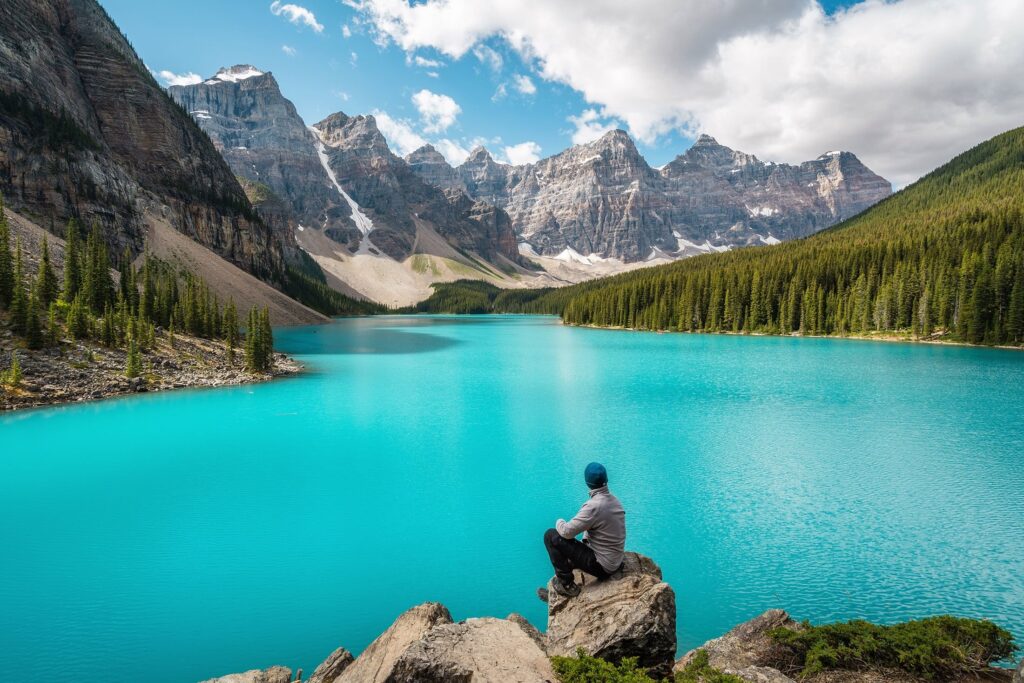
Lake Louise is one of the most famous and recognizable lakes in Canada. Located in Banff National Park in the province of Alberta, the lake is known for its bright turquoise water, mountain scenery, and natural beauty. It is considered one of the most iconic glacial lakes in the world.
The lake attracts photographers, nature lovers, and researchers who are interested in glacial landscapes and freshwater ecosystems.
Location and Geography
Lake Louise is situated in the Canadian Rockies within Banff National Park, about 180 kilometers (112 miles) west of Calgary, Alberta. The lake lies at an elevation of approximately 1,750 meters (5,740 feet) above sea level.
It is surrounded by high mountain peaks, including:
- Mount Victoria
- Mount Lefroy
- Mount Temple
These mountains are part of the Rocky Mountain range and contribute to the lake’s unique environment.
Why the Water Is Turquoise
One of the most striking features of Lake Louise is its bright turquoise color. This color is caused by glacial rock flour, which is fine particles of rock created by the movement of glaciers.
As the glacier melts, the water carries these particles into the lake. The particles reflect sunlight, giving the lake its famous blue-green appearance.
This natural process is common in glacial lakes throughout the Canadian Rockies.
History of Lake Louise
Lake Louise was named after Princess Louise Caroline Alberta, the fourth daughter of Queen Victoria. She was also the wife of the Marquis of Lorne, who served as the Governor General of Canada from 1878 to 1883.
Originally, the lake was called Emerald Lake because of its color. Later, the name was changed to Lake Louise to honor the princess.
In the late 19th century, the Canadian Pacific Railway promoted the area as a scenic destination, which helped make Lake Louise internationally famous.
Climate and Seasonal Changes
Lake Louise experiences cold mountain weather for most of the year.
Summer
- The glacier melts, feeding water into the lake.
- The lake shows its bright turquoise color.
- Surrounding forests and mountains become green and vibrant.
Winter
- The lake freezes completely.
- The surface becomes covered with snow and ice.
- Temperatures often drop well below freezing.
These seasonal changes make Lake Louise an interesting subject for environmental studies and photography.
Wildlife Around Lake Louise
The forests and mountains around Lake Louise are home to a variety of wildlife species, including:
- Grizzly bears
- Black bears
- Elk
- Mountain goats
- Wolves
- Bald eagles
The area is part of a protected national park, which helps preserve its natural ecosystems.
Environmental Importance
Lake Louise is part of a sensitive alpine ecosystem. Glacial lakes like this are important because:
- They store freshwater from melting glaciers.
- They support local plant and animal life.
- They help scientists study climate change and glacial movement.
Changes in the size of nearby glaciers directly affect the water level and color of the lake.
Interesting Facts About Lake Louise
- It is one of the most photographed lakes in Canada.
- The lake is fed by the Victoria Glacier.
- It freezes for about five months each year.
- It sits inside Banff National Park, Canada’s first national park.
Conclusion
Lake Louise is more than just a beautiful lake. It is a natural glacial formation with historical, environmental, and scientific importance. Its unique turquoise water, mountain surroundings, and changing seasons make it one of the most recognized lakes in Canada.